Assessment Evidence Practice
Questions focus on the evidence an assessor gathers before design decisions are made.
- Condition-report prompts
- Occupancy scenarios
- Ventilation and damp clues
- Heritage and constraint checks

PAS 2035 Retrofit Assessor
Built for learners who need to understand the evidence-gathering role at the start of a PAS 2035 domestic retrofit project.


Questions in the app
Syllabus topics
Answer formats
Profession
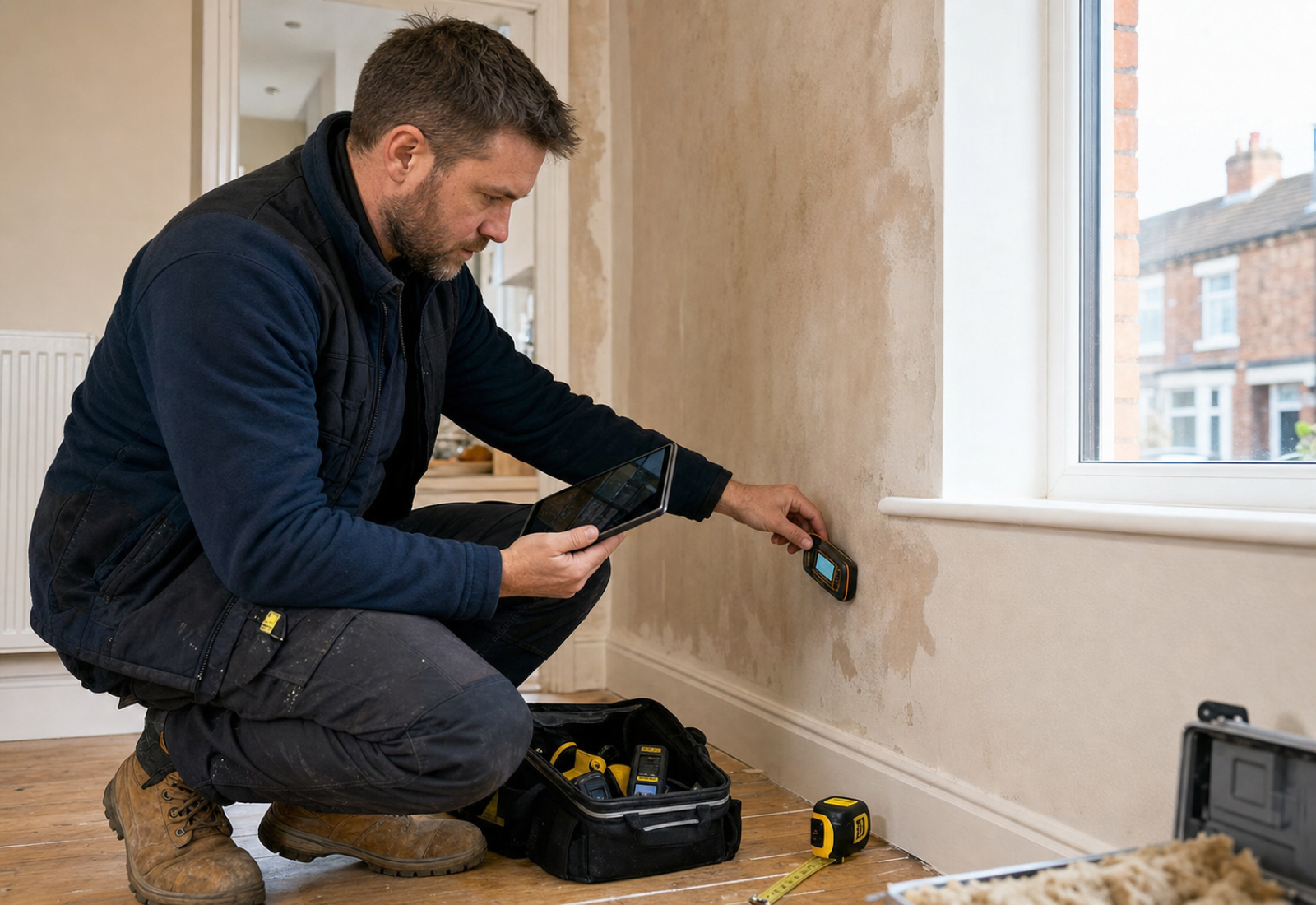
A Retrofit Assessor is the site-based professional who records the evidence a Retrofit Coordinator needs before retrofit measures are designed. The assessor looks at the dwelling as a whole, not just one measure, and records the building fabric, services, occupancy, ventilation, condition, constraints, and supporting photographs.
The role matters because retrofit decisions can create unintended consequences when condition, moisture, ventilation, heritage, or occupant needs are missed. Good assessment evidence lets the coordinator decide the project risk path, brief designers properly, and produce a practical improvement plan for the home.
Certification and testing
Learners usually work toward a Level 3 Retrofit Assessor qualification and then operate through a recognised retrofit assessor scheme. Where an energy report is needed, DEA/RdSAP competence and scheme rules can also be relevant, because the energy evidence has to be produced consistently with the current methodology and scheme requirements.
Assessment is normally a mix of knowledge checks and practical evidence: understanding PAS 2035 duties, carrying out dwelling surveys, preparing condition and occupancy evidence, recording limitations, and producing reports that can be audited by a coordinator or scheme.
PAS 2035 process, project roles, risk paths, and documentation flow
Condition, occupancy, ventilation, heritage, and building-services evidence
Energy evidence, RdSAP conventions, photographic evidence, and report quality
Professional judgement, limitations, resident communication, and audit readiness
App features
Questions focus on the evidence an assessor gathers before design decisions are made.
The app separates assessor duties from coordinator, designer, installer, and evaluator responsibilities.
Many retrofit decisions require more than one correct action, so the practice bank includes multi-select questions.
Study workflow
Use the web quiz for free samples, then continue in the app for the full topic bank and repeated practice.
Survey the dwelling
Record condition and occupancy evidence
Identify risks and constraints
Submit assessor evidence to the coordinator
Topics
Open the free quiz for a topic or jump to the one-page study guide for deeper descriptions.
This topic anchors the assessor in the PAS 2035 process: why the whole-dwelling approach exists, how roles interact, and how assessor evidence supports later design decisions.
Retrofit advice is about communicating clearly without drifting outside the assessor role. Learners should know how to explain evidence, limitations, and next steps without designing measures prematurely.
This topic connects PAS 2035, PAS 2030, TrustMark expectations, and scheme rules so learners can place assessor work inside the quality framework.
Risk assessment asks the assessor to recognise property and project factors that may change the level of evidence, specialist input, or coordinator attention required.
Building physiology covers how heat, air, moisture, and materials interact. For assessors, the key is spotting evidence that could affect retrofit suitability.
Occupancy assessment records how people actually use the dwelling. That includes heating patterns, ventilation behaviour, rooms in use, comfort issues, and constraints that may affect a retrofit plan.
Dwelling appraisal is the structured view of the property: form, age, construction, services, context, defects, past works, and constraints.
The condition report records existing defects and evidence quality. It protects the project from installing measures over damp, decay, unsafe access, or unsuitable fabric.
These external references are useful background while preparing for the qualification route. Always follow your awarding body, training provider, and scheme requirements for assessment evidence.